
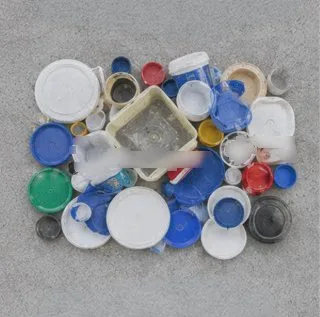
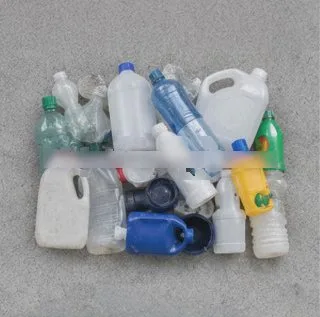
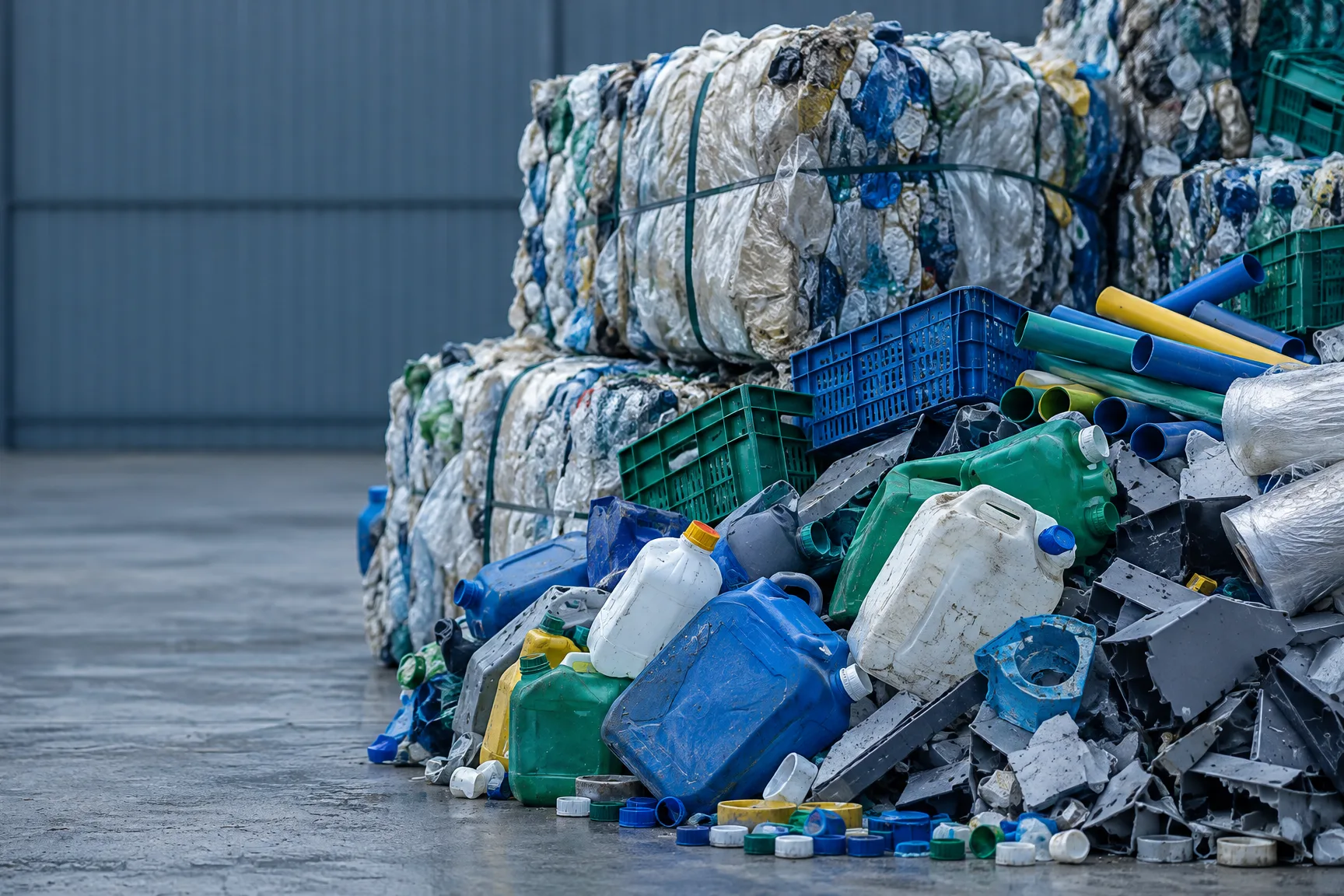
Film, packaging, jerrycans, drums, crates, industrial parts or production offcuts: businesses generate plastic waste of very different kinds. Yet the term “plastic” actually covers many materials, whose properties and recycling potential vary with the polymer, its quality and how dirty it is.
That is why sorting is decisive here. Metal Resource collects, sorts and prepares plastic waste so that each material goes to the most suitable recycling or recovery channel. From Puceul, north of Nantes, the company works with manufacturers, shops and logistics hubs.
The aim is to turn plastic waste into new raw material whenever possible.
Identifying, separating and preparing plastics
- 01
Collect
Plastic waste is collected in containers agreed with you, according to its volume, its type and the access conditions on site.
- 02
Identify and sort
Where possible, plastics are separated by polymer and form: film, rigid plastics, packaging or industrial offcuts, so as to create uniform streams.
- 03
Remove contaminants
Foreign materials, such as metals, cardboard or wood, are removed to improve the quality of the streams destined for recycling.
- 04
Route to the right channels
The prepared materials go to recyclers able to turn them into recycled plastic, or to find them another recovery route.
Not one plastic, but many polymers
Each plastic family is a distinct polymer, with its own density, melting point and uses. Two different polymers do not mix when remelted: a batch contaminated by another material loses its mechanical properties, and therefore its value. Recognising the polymer is the precondition for any recycling.
| Code and polymer | Typical item | Where it’s found | Technical notes | What it becomes |
|---|---|---|---|---|
| 1PETPolyethylene terephthalate | 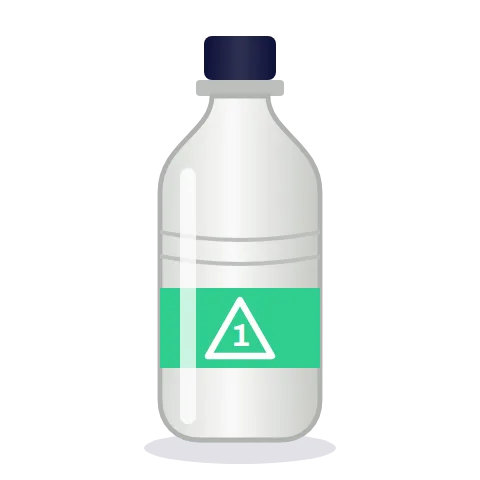 | Bottles, clear trays, film, strapping | Density ≈ 1.38: it sinks in water. Very sensitive to the presence of PVC, which degrades it during remelting. | Flakes then textile fibres, new bottles, strapping |
| 2HDPEHigh-density polyethylene | 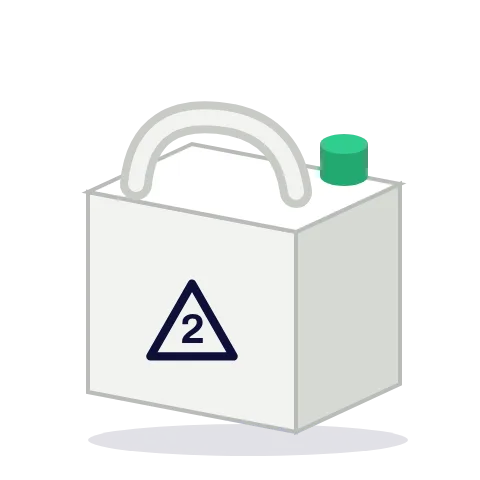 | Jerrycans, drums, bottles, crates, pipes, caps | Density 0.94 to 0.96: it floats. Rigid and resistant to chemicals. | Pellets for pipes, jerrycans, crates, outdoor furniture |
| 3PVCPolyvinyl chloride | 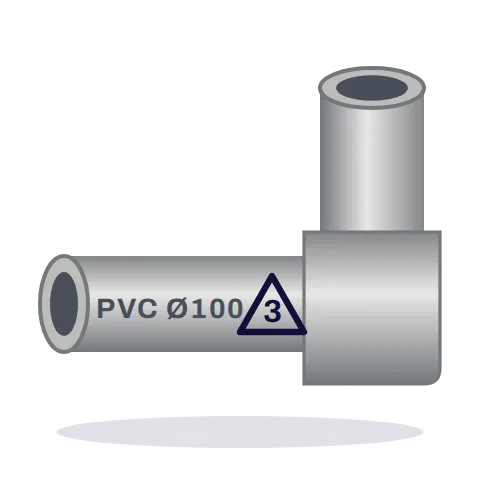 | Pipes and fittings, conduits, window and door profiles, tarpaulins, cable sheathing | Contains nearly 57% chlorine by mass; density ≈ 1.4 for rigid PVC. Must be kept strictly separate from other streams. | Dedicated channels: new profiles, pipes, coverings |
| 4LDPELow-density polyethylene | 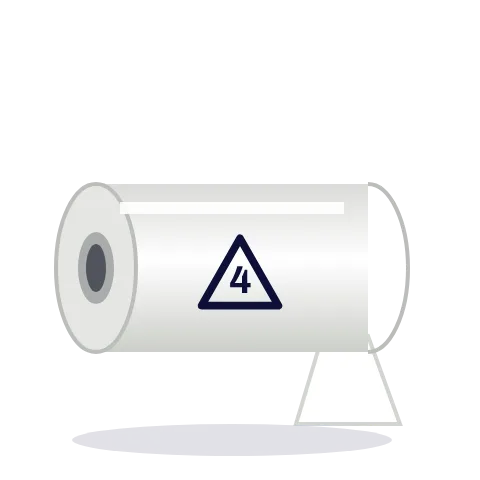 | Packaging film, stretch film and pallet covers, bags | Density 0.91 to 0.93: it floats. Flexible; keep it clean and dry so that it can be reprocessed. | Pellets for new film, bags, sheathing |
| 5PPPolypropylene | 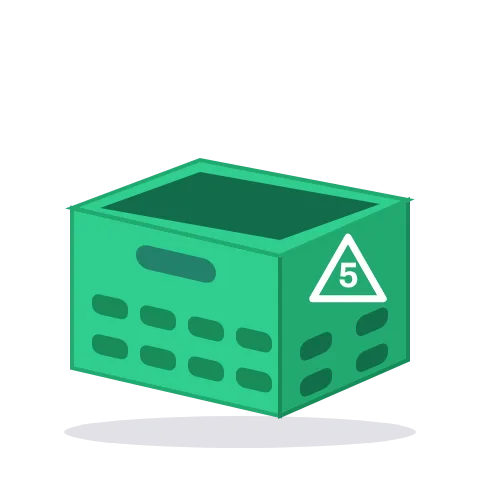 | Crates, plastic pallets, car parts, woven big bags, caps | Density ≈ 0.90: the lightest of the major polymers. Melts at around 160 °C. | Pellets for injection-moulded parts, automotive, crates |
| 6PS / EPSPolystyrene and expanded polystyrene | 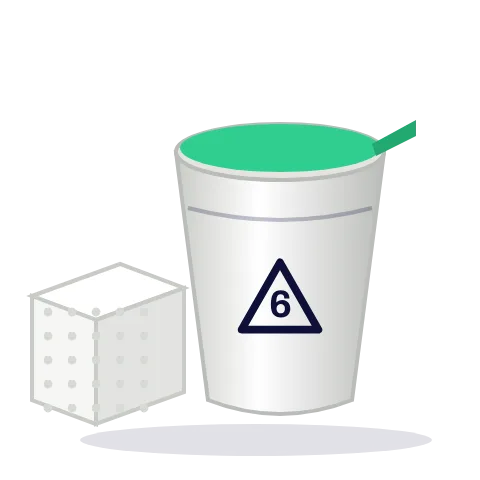 | Pots, trays; packing and protective packaging, insulation (EPS) | EPS is about 98% air: it must be compacted before transport. | Pellets, new insulation boards, moulded parts |
| 7ABS and othersABS, polycarbonate (PC), polyamide (PA), PMMA… | 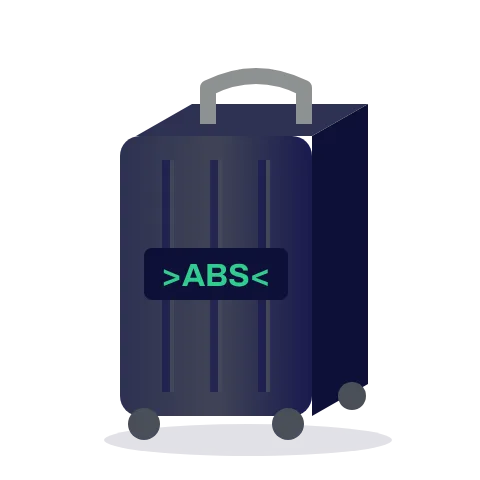 | Casings of electrical and electronic equipment, technical parts, car interiors | Engineering plastics, often filled or flame-retardant: their composition must be known before they are routed anywhere. | Engineering-grade pellets when the stream is pure; otherwise, specific channels |
Markings
Moulded parts often bear the abbreviation of their material between angle brackets, such as >PP< or >ABS< (ISO 11469 standard), and packaging a code from 1 to 7 in a triangle. This is the first clue for identification.
Density
Polyethylene and polypropylene, which are lighter than water, float; PET, PVC, ABS and solid polystyrene sink. Recyclers use this difference to separate polymers by flotation, after shredding.
Thermoplastic or thermoset
Thermoplastics (PE, PP, PET, PVC, PS, ABS) can be remelted and recycled. Thermosets (epoxy resins, glass-fibre-reinforced polyesters) cannot be remelted and require other solutions.
The right means for each stream
- Containers sized to your volumesSkips or bins, chosen with you according to the type of plastics and the space available. Film is collected separately and kept dry.
- 2 and 4 m³ binsTo separate resins at source; custom-made bins can be built to suit your needs.
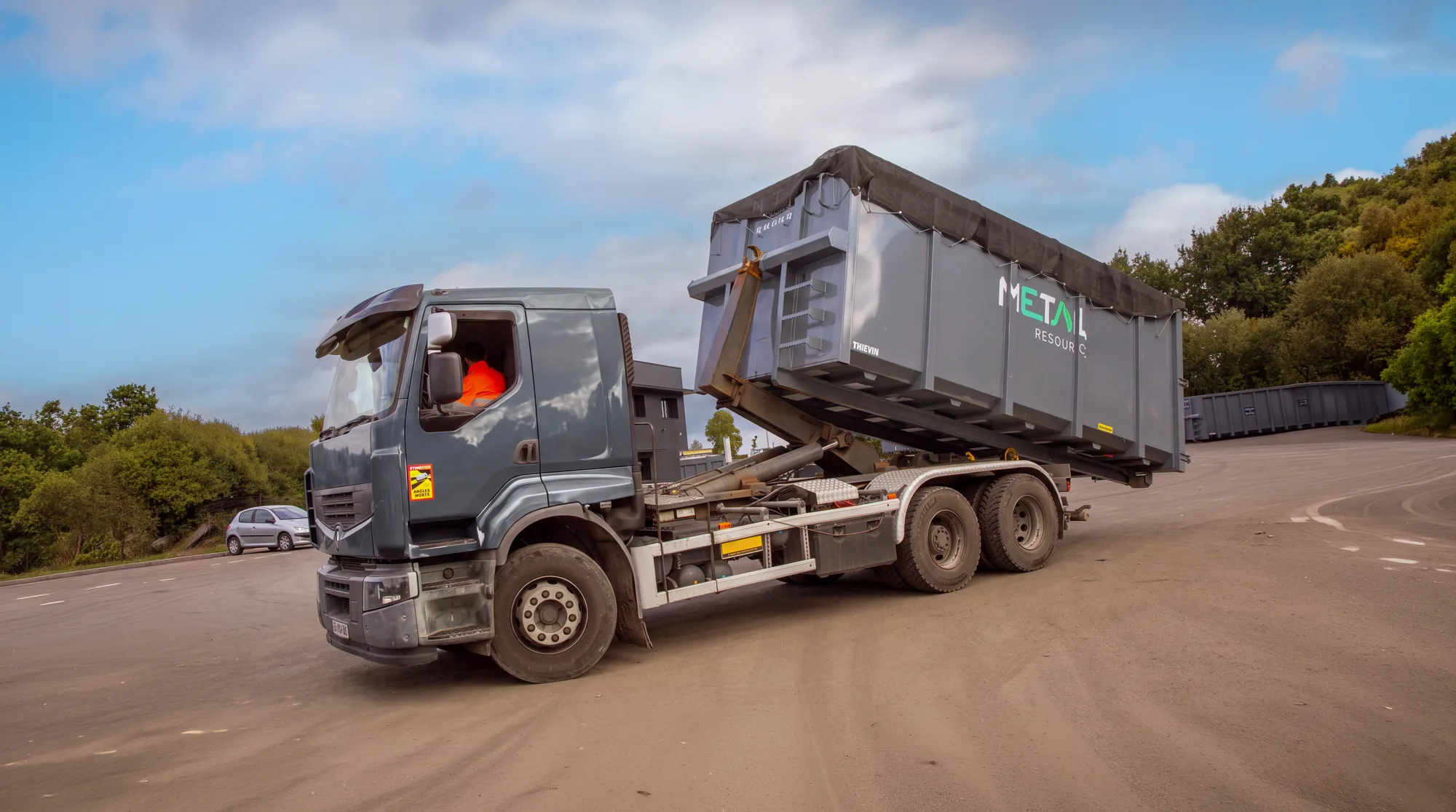
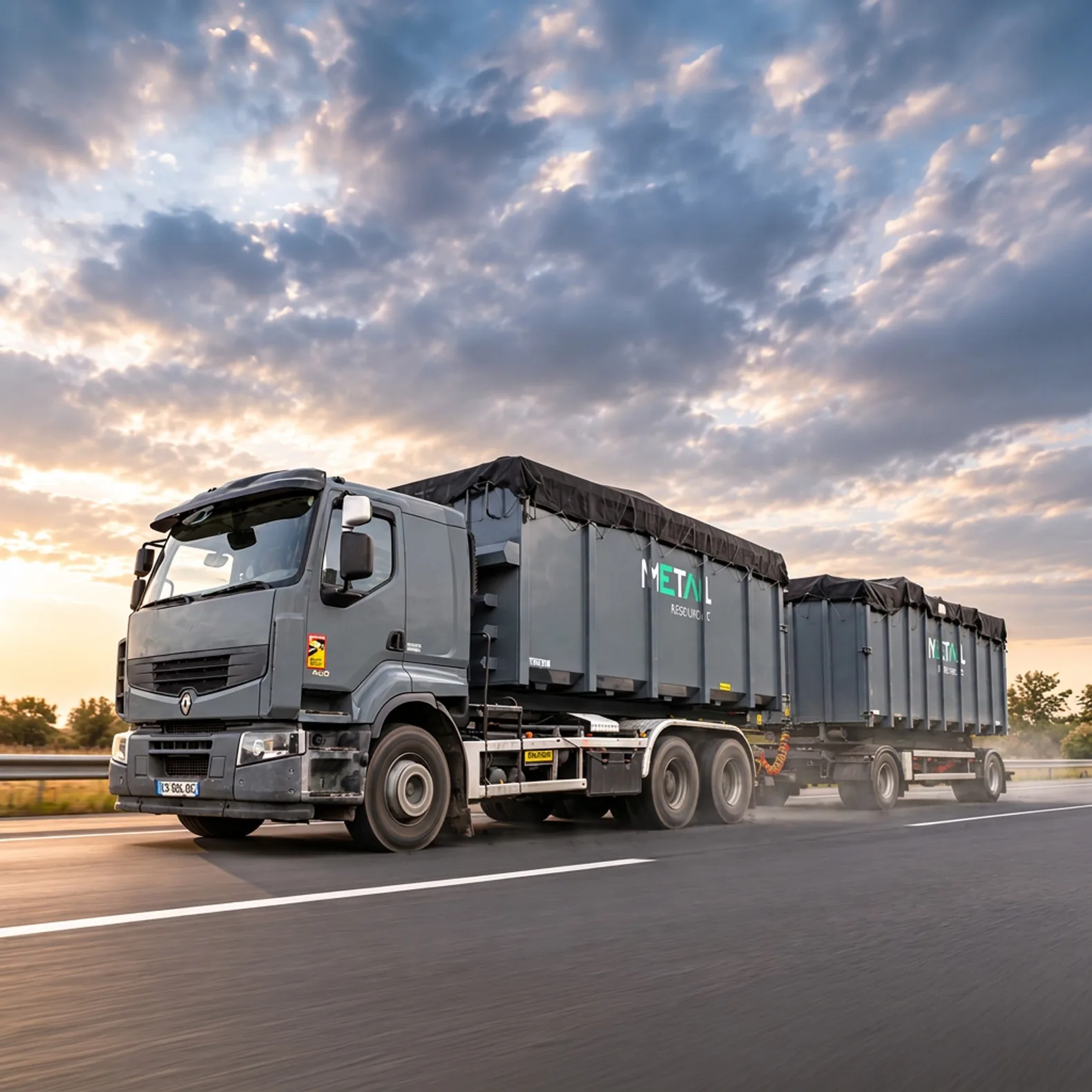
- Hook-lift truck and trailerIt carries out pick-ups at our customers’ sites and cuts down the number of trips.
Container agreed with you
Depending on the volume, the type of materials and access conditions on site.
What happens to plastics?
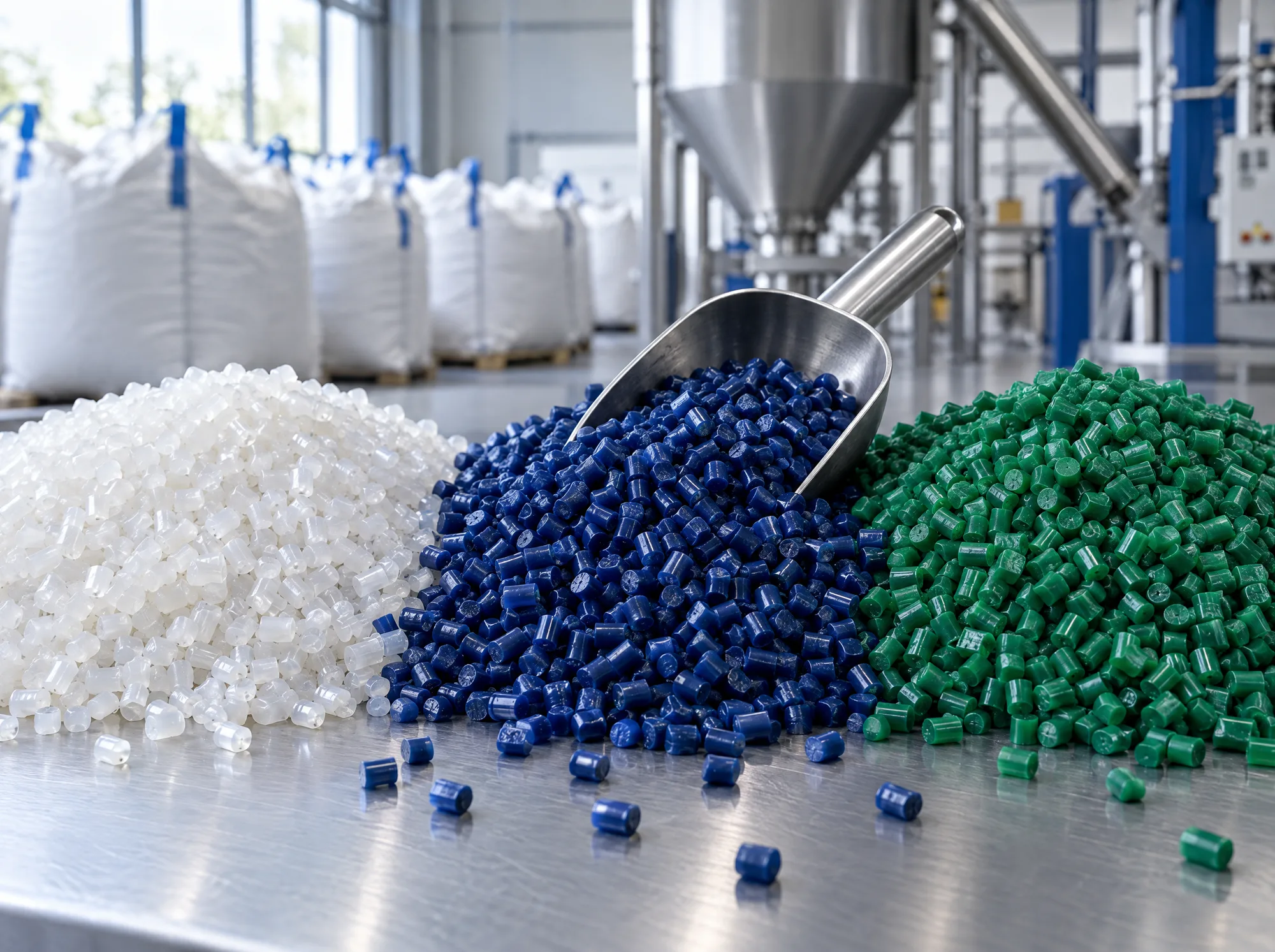
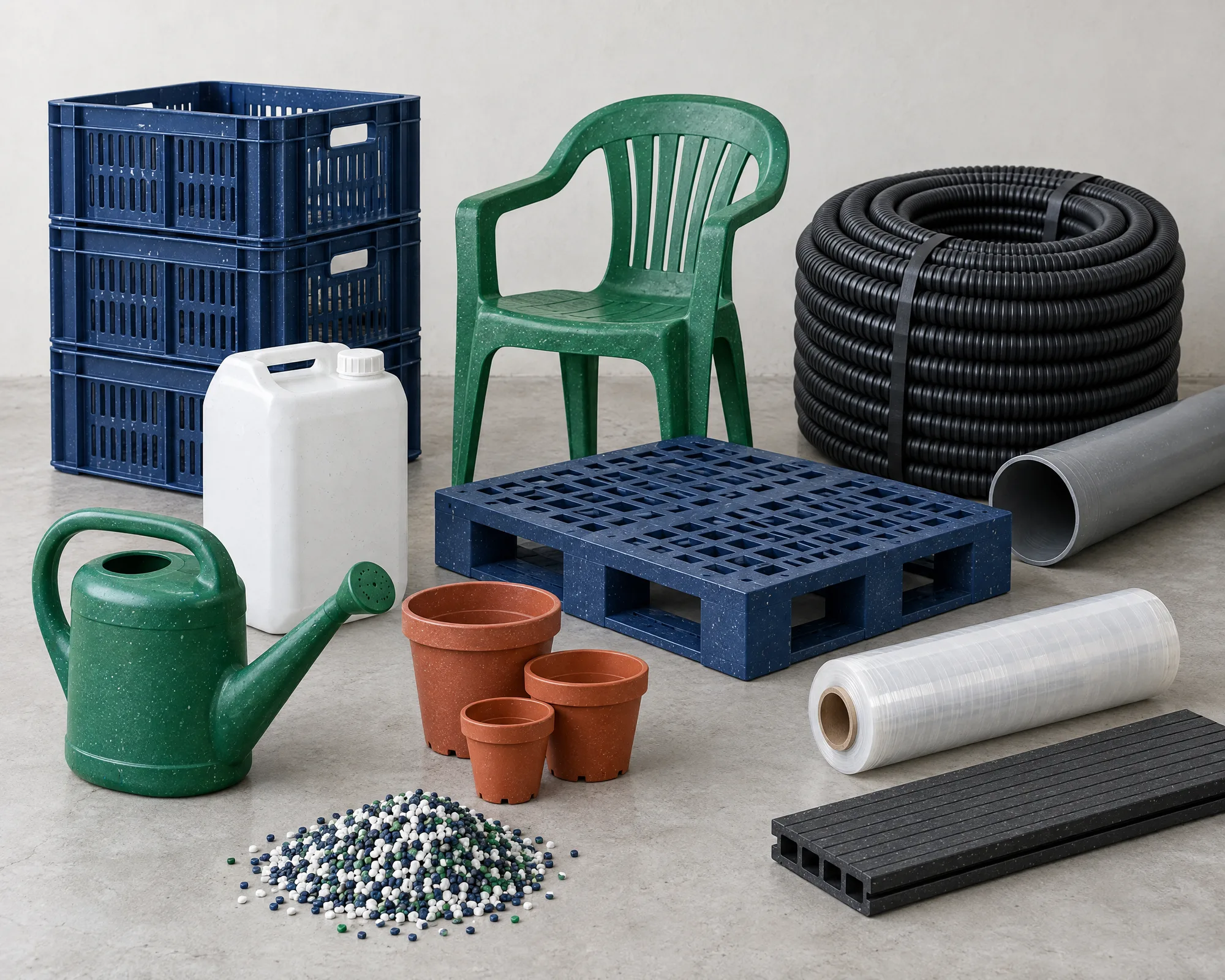
After sorting and preparation, some of the plastics go to a mechanical recycling channel. There they are sorted more finely, shredded, washed if necessary, then melted and filtered before being turned into flakes or pellets. This recycled material is then used to make new products: plastic parts, pipes, containers, film or industrial components, depending on the polymer and the quality achieved.
However, not all plastics are recycled in the same way: polymer blends, certain composites and heavily soiled materials require other treatment solutions.
- Plastic waste
- Identification
- Sorting
- Shredding
- Reprocessing
- Pellets or flakes
- New product
Well-sorted plastic becomes a material again
When mixed, many plastics become difficult to recycle. Identified and separated by family, by contrast, they form sources of secondary raw materials that the plastics industry can use.
The challenge is therefore to preserve the quality of the different streams, then send them to the channels best able to make the most of them. Where material recycling is not possible, some fractions can be sent for energy recovery, in line with regulations.
Processing in line with current environmental standards
The Metal Resource site is a classified installation for environmental protection (ICPE), subject to the declaration regime. It is operated in compliance with the regulatory requirements applicable to its activities.

Recycling your plastics
Which plastics does Metal Resource collect?
Film, packaging, jerrycans, crates, rigid plastics and production offcuts, sorted by type so that they can be sent to the right channel.
Why do polymers need to be separated?
Because two different polymers do not mix when remelted. A batch of PET contaminated with PVC, for example, degrades and loses its value; plastic sorted by family, on the other hand, becomes a raw material again.
How can you tell what type of plastic it is?
First by its marking: a code from 1 to 7 in a triangle on packaging, or the abbreviation between angle brackets (>PP<, >ABS<) on moulded parts. Its density and appearance complete the identification.
Are businesses required to sort their plastics?
Yes. Since 2021, regulations have required businesses to sort seven waste streams at source, including plastic, along with paper and cardboard, metal, glass, wood, mineral fraction and plaster. The smallest producers, whose waste is collected in small quantities by the public waste service, are exempt.
What happens to recycled plastics?
They are turned into flakes or pellets, which are used to make new plastic products: pipes, crates, film, technical parts.
Other materials
Do you have plastic waste to recover?
Film, packaging, rigid plastics, jerrycans, crates or production offcuts: Metal Resource helps you organise their collection, sorting and recovery.